

Blog
SEO Services: The Two Halves of Success (On-Page & Off-Page)
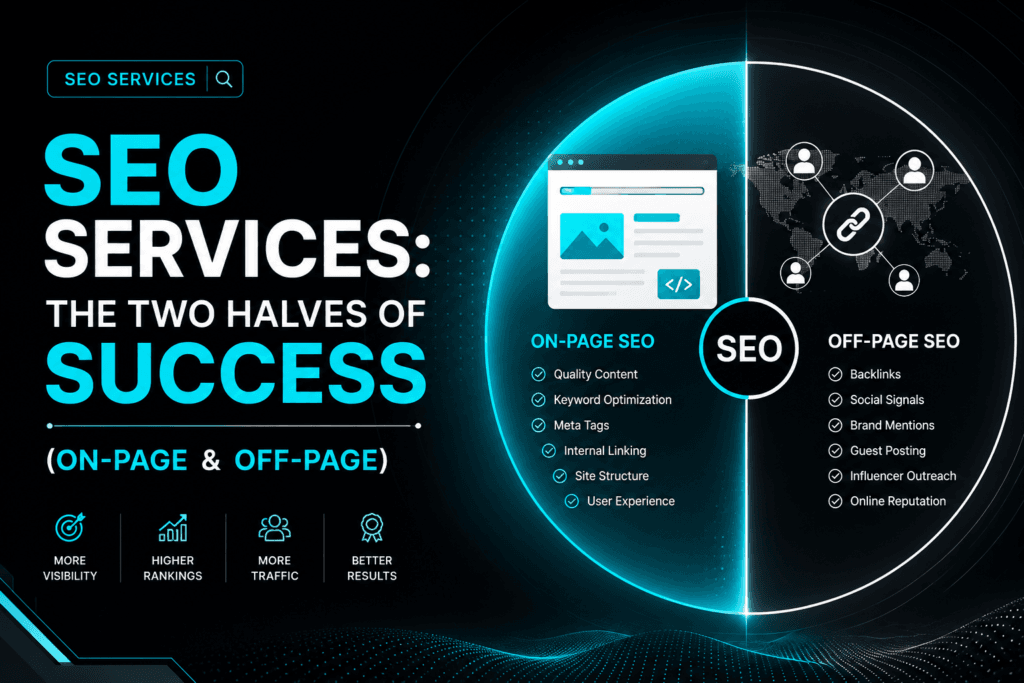
A comprehensive guide to mastering both pillars of search engine optimization and finding the right SEO services.
Search engine optimization is often treated like a single discipline, a checklist of tasks you complete before hitting “publish” and waiting for Google to notice. But the truth is more nuanced — and more exciting. SEO is actually composed of two distinct forces that must work in harmony: on-page content and off-page authority. Think of it as a coin. One side means nothing without the other. Consequently, if you flip it, you realize that real, lasting search visibility comes from mastering both using reliable SEO services.
In this post, we’ll break down what each half means, why it matters, and how to balance them for long-term SEO success.
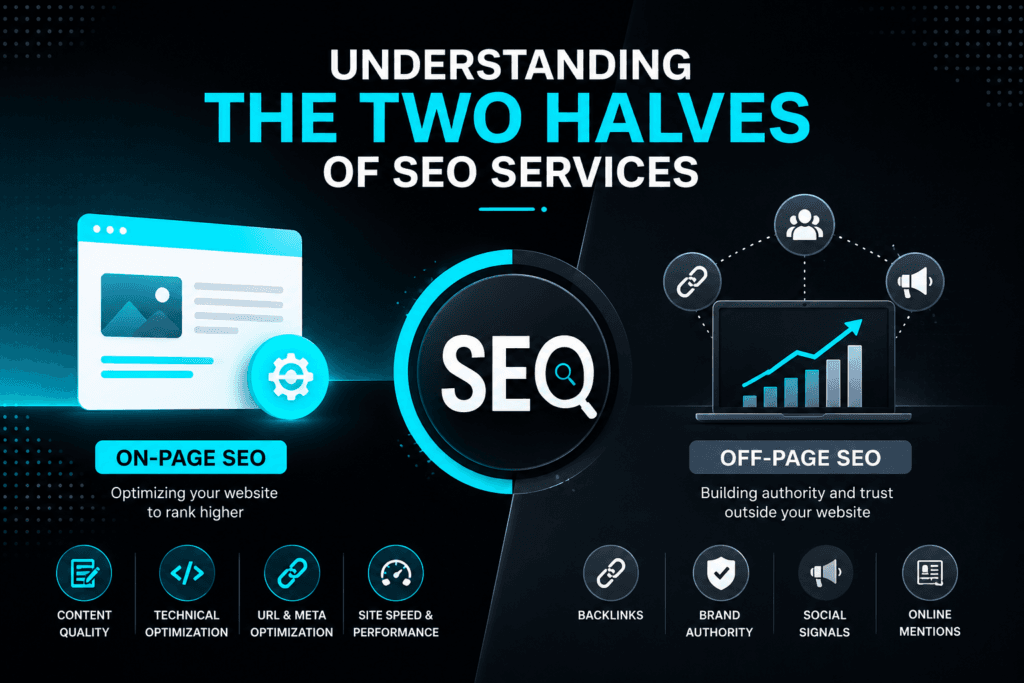
1. Understanding the Two Halves of SEO Services
Before diving into tactics, it’s worth understanding what we mean by each half.
On-Page SEO Services — Everything You Control
On-page SEO refers to everything you control directly on your website — the content you write, the keywords you target, the structure of your pages, your meta titles and descriptions, internal linking, image alt text, and technical elements like page speed and mobile responsiveness. Ultimately, utilizing professional on-page SEO services is the craft of making each page as relevant, readable, and well-organized as possible for both users and search engines.
Off-Page SEO Services — Building Authority
Off-page SEO, by contrast, encompasses everything that happens outside your website that influences how search engines perceive your authority and trustworthiness. This includes backlinks from other websites, brand mentions, social signals, and your overall digital reputation. Therefore, if on-page SEO is about what you say, off-page SEO is about what others say about you.
Neither half is optional. A beautifully written, technically perfect website that nobody links to will struggle to rank for competitive terms. Conversely, a site with thousands of backlinks but thin, poorly structured content will increasingly fail to satisfy searchers — and Google’s algorithms are getting better at telling the difference every year without ongoing SEO services.
Half One: On-Page SEO Content
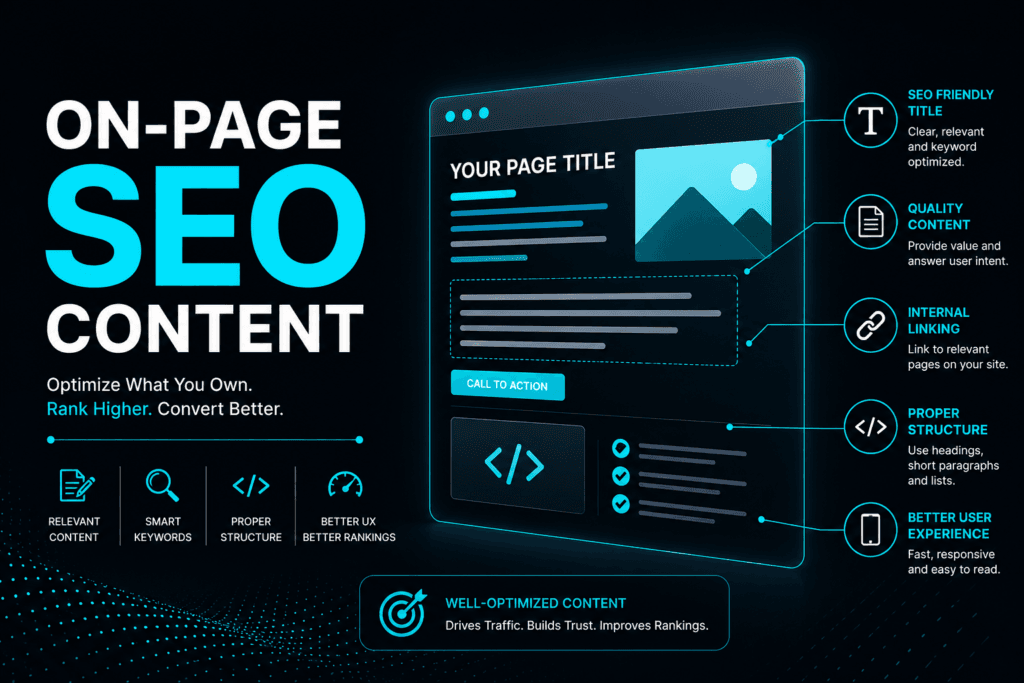
1. Content Quality for Your SEO Services
The first rule of on-page SEO is deceptively simple: write content that genuinely helps people. Google’s helpful content updates in recent years have been a clear signal that the search engine is doubling down on rewarding expertise, originality, and real value. Gone are the days when padding a post with keyword repetitions could game the algorithm.
High-quality on-page content means writing with depth and accuracy, addressing the actual questions your audience is searching for, and presenting information in a way that’s easy to digest. Furthermore, utilizing high-quality SEO services means going beyond surface-level answers and demonstrating the kind of expertise that makes a reader think, “This is exactly what I needed.”
2. Keyword Strategy and Search Intent
Keywords remain central to on-page SEO, but how you use them has evolved significantly. The modern approach prioritizes search intent over raw keyword frequency. Before writing any piece of content, you should ask: what is the person searching this term actually trying to accomplish? Are they looking to learn something (informational intent)? Make a purchase (transactional intent)? Find a specific website (navigational intent)?
Aligning your content to the correct intent is now one of the most critical ranking factors. For example, a page targeting “best running shoes” needs to be a comparative guide, not a product page for a single item. As a result, mismatching content to intent is one of the most common on-page mistakes — and one of the easiest to fix once you know to look for it with the help of professional SEO services.
3. Structural Signals and Optimization
Beyond content itself, how you structure a page sends powerful signals to search engines. Proper use of heading tags (H1, H2, H3) creates a logical hierarchy that helps Google understand what your page is about and which sections are most important. Your H1 should include your primary keyword, but it should also be compelling to human readers — it’s the headline that determines whether someone clicks through from search results.
Meta titles and descriptions, while not direct ranking factors, influence click-through rates dramatically. A well-crafted meta description acts like a mini advertisement for your page. Additionally, technical elements like clean URL structures, internal linking (connecting related pages on your own site), fast load times, and mobile-first design round out the on-page picture. Each of these signals, individually small, collectively form a strong foundation for comprehensive SEO services.
| On-Page Pro Tip Use Google’s “People Also Ask” and “Related Searches” sections to identify semantic keywords and subtopics your content should cover. Pages that answer more related questions in a single piece consistently rank higher and capture more featured snippets. |
On-Page SEO Extensions
- Yoast SEO — Meta titles, descriptions, readability checker.
- SEOquake — On-page SEO audit, keyword density, meta info.
- MozBar — Page authority, on-page elements analysis.
- Detailed SEO Extension — Headings, meta tags, schema checker.
- Surfer SEO — Content optimization & NLP keyword suggestions.
- Fatrank — Check keyword ranking for any page.
Half Two: Off-Page SEO Authority
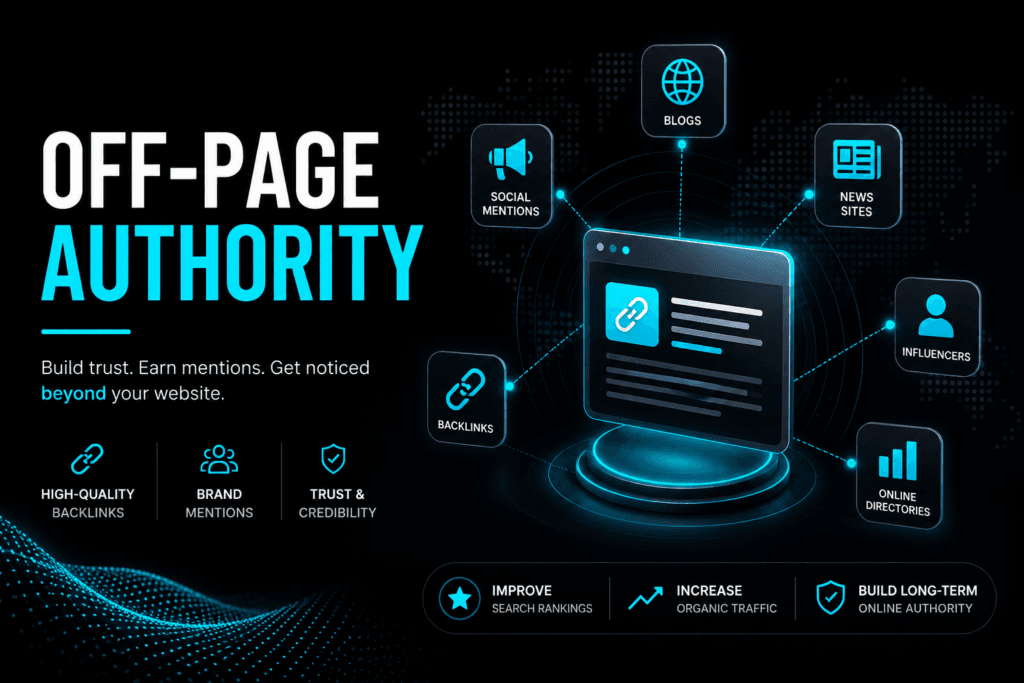
1. Why Authority Matters in SEO Services
Imagine two websites publishing articles on the same topic with equally excellent content. Why would Google rank one above the other? The answer almost always comes down to authority — and authority is built off-page.
Google’s original PageRank algorithm was built on a simple but brilliant insight: a link from one website to another is essentially a vote of confidence. Not all votes are equal; a link from a trusted, high-authority website in your industry carries significantly more weight than a link from an obscure, unrelated blog. Over two decades later, this fundamental principle still drives much of how rankings are determined, which is why authoritative SEO services focus heavily on off-page signals.
2. The Art of Earning Backlinks
Backlinks — links from external websites pointing to yours — remain the most powerful off-page ranking signal. However, earning quality backlinks requires a strategic mindset rather than a transactional one.
The best backlinks are earned organically, when other content creators, journalists, or website owners find your content genuinely useful and worth referencing. This is why content quality and off-page authority are deeply intertwined: the best link-building strategy is simply creating content so valuable and original that people want to share and cite it.
Beyond organic link earning, proactive strategies are highly effective. First, you can use digital PR by creating data-driven stories or research that journalists want to cover. Next, consider guest posting on reputable industry publications. In addition, you can build genuine relationships with creators in your niche and claim unlinked brand mentions.
However, some tactics simply do not work and will actively harm your site. For instance, never purchase links or participate in link farms. Avoid any manipulative scheme that violates Google’s guidelines. The risks far outweigh the short-term gains. Ultimately, this is why you should always rely on organic off-page SEO services.
3. Brand Signals and Digital Reputation
Off-page authority extends beyond backlinks. Brand mentions — even without a clickable link — are increasingly understood by Google as a trust signal. When your brand name appears frequently across authoritative, relevant corners of the web, it contributes to what SEOs call your Entity Authority: Google’s holistic understanding of who you are, what you’re about, and whether you’re worth trusting.
Reviews, social media presence, podcast appearances, influencer mentions, and participation in industry communities all contribute to this broader digital footprint. None of these replace backlinks, but together they paint a fuller picture of a credible, active brand — and credibility is the currency of off-page SEO.
| Link Quality Warning Never purchase backlinks or participate in link schemes. Google’s Penguin algorithm and manual spam reviews actively penalize manipulative link practices. One toxic link profile can undo years of legitimate SEO work — focus exclusively on earning links through genuine value creation. |
Off-Page SEO Extensions
- MozBar — Domain Authority (DA) & Page Authority (PA) checker.
- Ahrefs SEO Toolbar — Backlink count, DR, UR for any site.
- SEMrush SEO Writing Assistant — Content & backlink insights.
- BuzzSumo — Content popularity & social shares.
- Hunter.io — Find email addresses for outreach/link building.
- Similarweb — Traffic & referral source analysis.
Bringing Both Halves Together with Professional SEO Services
The most effective SEO strategies treat on-page and off-page as a unified system, not competing priorities.
Here’s a practical framework to think about it:
Start with on-page: No amount of backlinks will compensate for weak, unfocused, or unhelpful content. Before you invest time in link building, ensure your pages are optimized for the right intent, structured clearly, and genuinely worth linking to. Think of this as building a house before inviting guests.
Build authority in parallel: Once your content foundation is solid, start investing in off-page efforts. Identify the content pieces most likely to earn links — original research, comprehensive guides, unique data, strong opinion pieces — and promote them proactively. Build relationships in your industry. Create content worth talking about.
Monitor, adjust, iterate: SEO is not a set-it-and-forget-it practice. Track your keyword rankings, monitor your backlink profile for toxic links, update older content to keep it fresh and relevant, and keep a close eye on how your top-performing pages behave as Google’s algorithm evolves.
| The Bottom Line |
|---|
| SEO success isn’t found in optimizing one half while neglecting the other — it’s found in the balance. On-page content is your voice: it demonstrates expertise, speaks to intent, and earns the trust of every visitor who lands on your page. Ultimately, off-page authority is your reputation: it tells the internet, and Google, that you’re a source worth listening to. The brands that win long-term in search are those that invest consistently in both — creating content that earns links and building authority that amplifies their content. Master the two halves, and you stop chasing rankings. Instead, you start deserving them with the right SEO services. |